ROKAE Collaborative Robot: Automation Without Fences
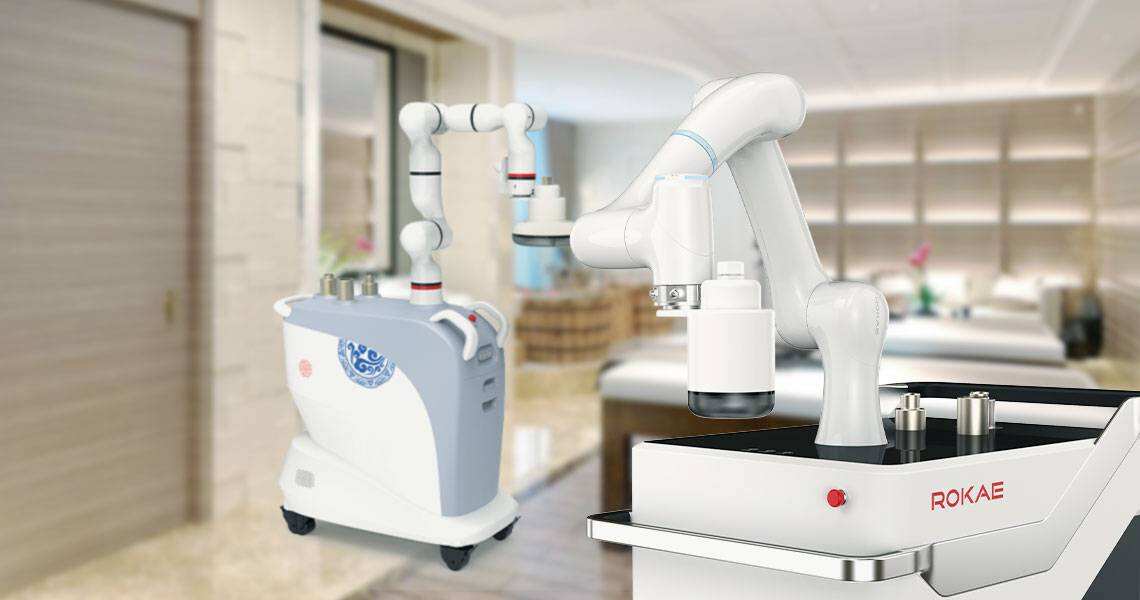
The ROKAE collaborative robot is a robotic arm that works side by side with humans, without a protective cage. It senses contact, stops on collision and is programmed via hand-guiding or a graphical interface.
Cobot is short for collaborative robot. Unlike a classic industrial robot, it takes up little space, moves easily between workstations and is deployed in days, not months. That makes cobots the fastest path to automation for small and medium manufacturers.
In this article you will find the ROKAE xMate cobot series, their specifications, advantages and where they deliver the most value.
Who Is Behind ROKAE
ROKAE Robotics was founded in 2015 in Beijing and is now among the world's leading manufacturers of collaborative and industrial robots.
- Proprietary technology. The company develops its own joints, controllers and software and holds hundreds of patents.
- R&D. Research centres in Beijing, Tokyo, Wuhan and Shandong; over 80% of engineers hold a master's degree or higher.
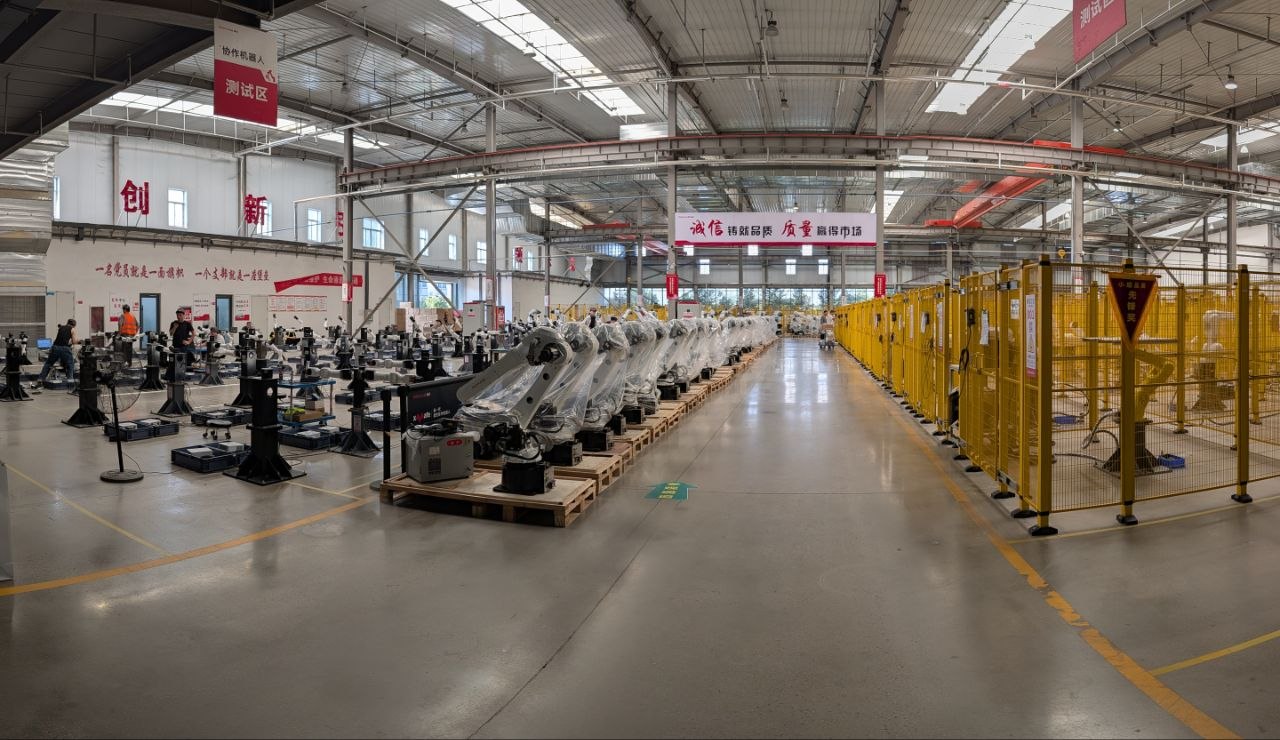
- Scale. The Shandong factory has a capacity of over 20,000 robots per year; the company operates in more than 20 countries.
- Customers. ROKAE robots operate in the automotive industry, electronics and healthcare, including at suppliers such as Valeo and Schaeffler.
The xMate cobots were launched in 2018 and have since grown to several series — from 3 kg to 45 kg payload.
ROKAE xMate Cobot Series
ROKAE offers four series of collaborative robots — from the lightweight SR for small parts to the CR35 for palletising with 45 kg payload.
| Series | Payload (kg) | Reach (mm) | Axes | Protection | Best for |
|---|---|---|---|---|---|
| xMate SR | 3–5 | 705–919 | 6 | IP54 (IP67 option) | Light assembly, food & service automation |
| xMate ER / ER Pro | 3–7 | 850–1125 | 7 | IP54 | Precision assembly, screwdriving, measurement |
| xMate CR | 7–20 | 705–1798 | 6 | IP54 / IP67 | Machine tending, welding, grinding |
| xMate CR35 | up to 45 | up to 2246 | 6 | — | Palletising, solar panels, heavy parts |
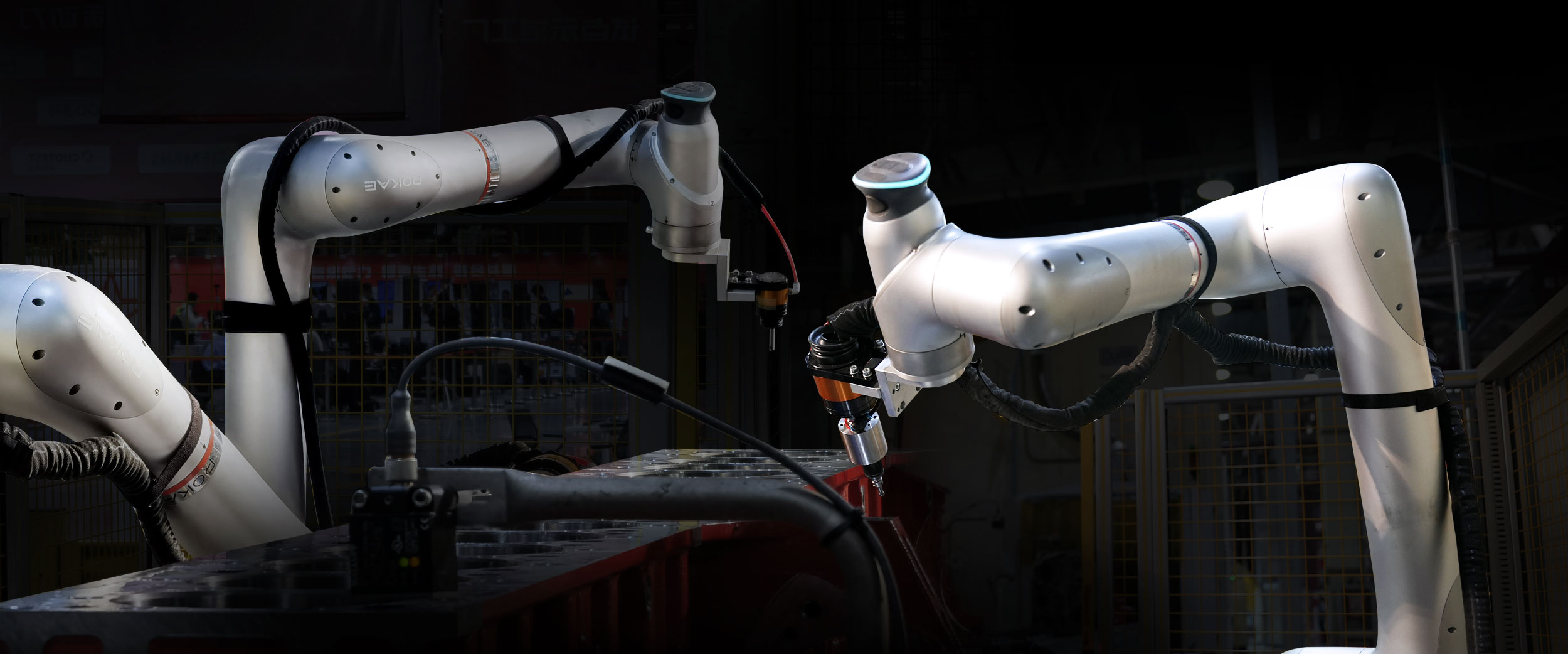
The most popular model, xMate CR7: 7 kg payload, 988 mm reach, repeatability ±0.02 mm, up to 3.2 m/s, IP67 body, 27 kg weight. The seven-axis ER7 Pro has torque sensors in every joint and operates with direct force control.
Advantages of the ROKAE Collaborative Robot
The greatest advantage of ROKAE cobots is the combination of industrial precision and safe human collaboration, with a typical return on investment of 6 to 12 months.
- Safe operation without fences. Collision detection, virtual walls and over 21 configurable safety functions. The robot stops at the lightest touch.
- Force sensing. Built-in force sensors enable delicate assembly, grinding and screwdriving with controlled force.
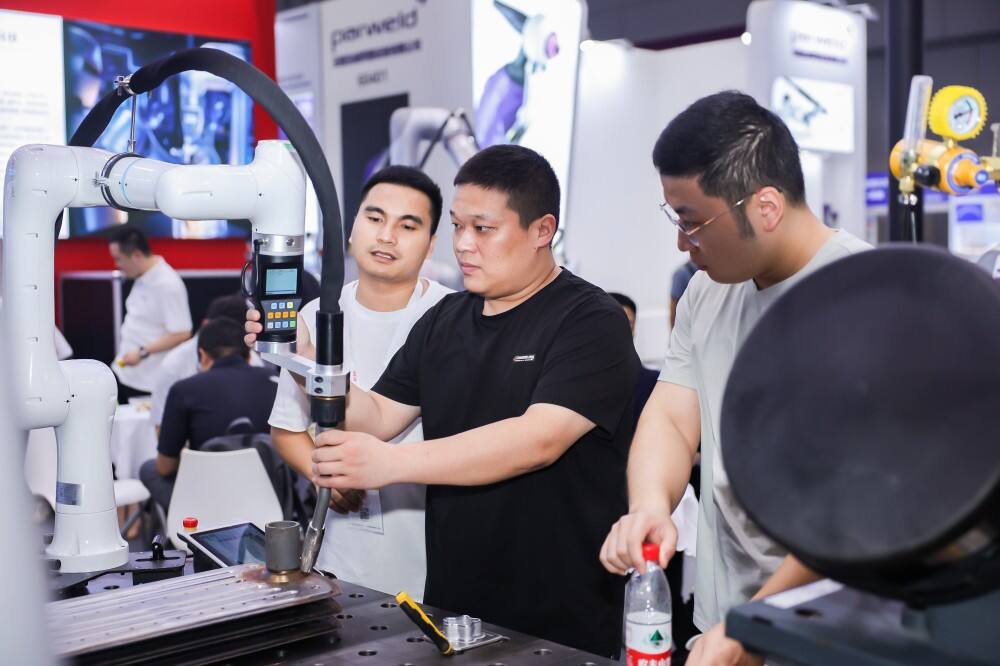
- No programmer needed. Hand-guiding (Direct-Teach) and a graphical interface — the operator demonstrates the movement by hand.
- High precision. Repeatability up to ±0.02 mm — the level of industrial robots.
- Industrial protection. IP67 body on CR and SR-C — resistant to dust, coolants and wash-down.
- Wide range. From 3 kg / 705 mm to 45 kg / 2246 mm — one brand and one software platform for the entire plant.
- Seven axes when needed. The ER series moves like a human arm and navigates around obstacles in tight spaces.
- Flexible mounting. Floor, wall, ceiling or mobile stand; easily relocated between operations.
- Fast ROI. The manufacturer states an average payback period of 6 to 12 months.
- Excellent value. Proprietary components keep prices below European and Japanese brands at comparable specifications.
Where ROKAE Cobots Are Used
ROKAE cobots take over repetitive, physically demanding or precision tasks, freeing up teams for higher-value work.
- Welding — MIG/MAG and TIG with hand-taught seams; suitable even for small batches.
- Machine tending — loading and unloading CNC lathes, mills and presses.
- Palletising — at the end of the line, with ready-made software packages (CR35 handles up to 45 kg).
- Assembly and screwdriving — electronics, automotive parts, PCBs and bolted joints.
- Grinding, polishing and deburring — with constant pressure thanks to force control.
- Packaging and pick-and-place — transferring between conveyors, trays and boxes.
- Quality control — measurement and inspection with cameras and sensors.
Safety and Certifications
The ROKAE collaborative robot features a TÜV-certified safety controller to ISO 13849-1, Performance Level d, Category 3.
- Dual-channel monitoring — dual absolute encoders and redundant sensors.
- Collision detection — ten times more sensitive than the previous generation on the ER Pro.
- Virtual walls and zones — the robot slows down when a person enters its zone.
- 21 TÜV safety certificates and an independent SIL3 controller for the CR35 series.
Important: the entire workstation must be collaborative, not just the robot. Sharp tools or heavy parts require a risk assessment before deployment.
Cobot vs Industrial Robot
The cobot wins on flexibility and deployment speed; the industrial robot wins on speed and payload for large series. ROKAE offers both.
| Criterion | ROKAE xMate Collaborative | ROKAE Industrial (XB / NB) |
|---|---|---|
| Fence | Not required (after risk assessment) | Mandatory safety cage |
| Programming | Hand-guiding, graphical interface | Teach pendant, specialist |
| Payload | 3–45 kg | 4–220 kg |
| Speed | Moderate near humans | Maximum |
| Relocation | Hours | Days or weeks |
| Best for | Small/medium batches, frequent changeovers | Large series, high cycle rate |
How to Choose a ROKAE Collaborative Robot
- Weight — part plus gripper or torch, with ~20% reserve.
- Reach — the furthest point the robot needs to access.
- Precision and force — for force-fit assembly, choose ER Pro with per-joint sensors.
- Environment — dust, coolant or wash-down requires IP67 (CR or SR-C).
- Cycle time and batch size — if cycles are very short, also compare with an industrial robot.
Artec Robotics — Official ROKAE Distributor
Artec Robotics is the official distributor and integrator of ROKAE for Bulgaria, Greece and Romania, headquartered in Dimitrovgrad. We support you from concept to running cell: model selection, integration, training and service.
Contact us for a demonstration: rokae.bg/contact · info@artec.bg · +359 889 557 337
Frequently Asked Questions
What is the difference between a cobot and a collaborative robot? There is no difference — "cobot" is short for collaborative robot.
Can a ROKAE cobot work without a fence? Yes, if the risk assessment of the entire workstation permits it. The robot has TÜV-certified safety functions.
Does operating a cobot require a programmer? No. Simple tasks are programmed via hand-guiding and a graphical interface; operators are trained in days.
How much does a ROKAE collaborative robot cost? The price depends on the model and configuration. Request a quote at info@artec.bg.
How quickly does a cobot pay for itself? According to ROKAE the average payback period is 6 to 12 months, depending on shifts and task.
Is there service and training available in Bulgaria? Yes — Artec Robotics provides on-site integration, training and service.